The second running of Neighbourhood Gravel’s Pecha Kucha night was held on the 14th of October at the St Leonards church hall in Hove. A total of 6 people presented to a lively and enthusiastic crowd! Presentations were delivered with style, questionable questions were asked, facts were learned and the community built by Neighbourhood Gravel was there for all to see and enjoy.
What is Pecha Kucha? PechaKucha (meaning “chit-chat” in Japanese) is a fast-paced presentation style created in Tokyo in 2003 by architects Astrid Klein and Mark Dytham. The format requires a speaker to show 20 slides that automatically advance every 20 seconds, resulting in a strict, non-stop presentation length of 6 minutes and 40 seconds (the 20×20 rule). Designed to cut out fluff and focus on visual storytelling, it is widely used in design, business, and education to keep audiences engaged.
This time we are sharing Clive Andrews presentation on his experience of the Beaver. We will be sharing all of the presentations from the night over the next few weeks.
Words and 📷 by: Clive Andrews or credited sources
1. It’s a simple story, really. Just the tale of how the end of the Second World War led to one of the best days of mountain biking I’ve ever had – all thanks to this remarkable little aircraft.
2. First, some history. During the Second World War, aircraft company de Havilland Canada is hard at work building around 400 of these: the de Havilland Mosquito – made, believe it or not – from balsa wood. But then in 1945, the war ends! Could de Havilland Canada find a way to make use of its aircraft-building facilities and workforce in times of peace?
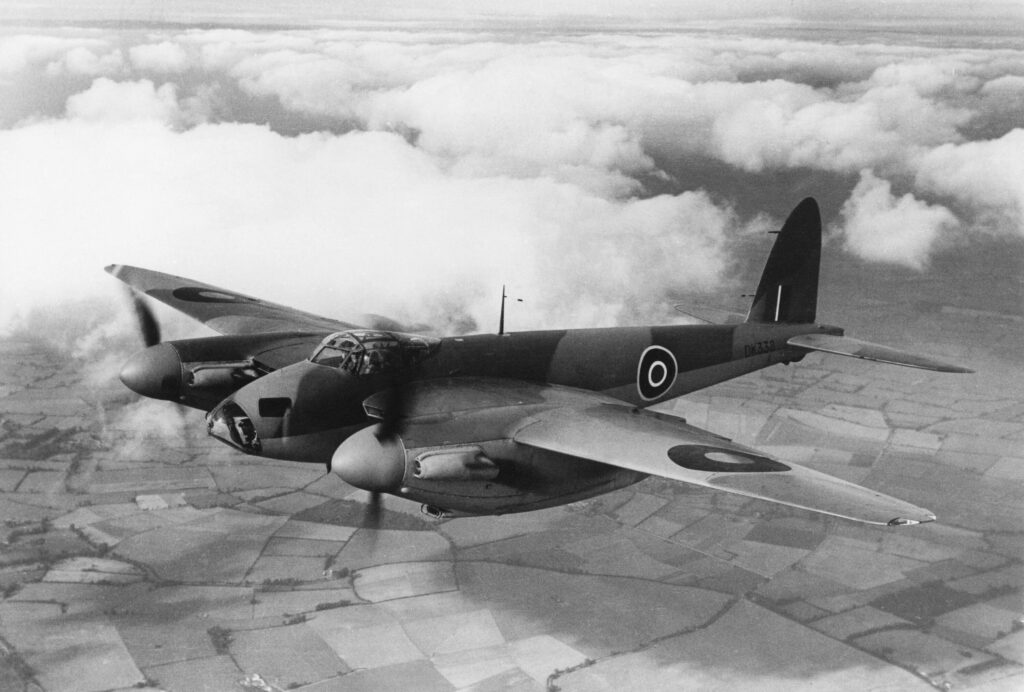
(Photo: Fotoafdrukken Koninklijke Luchtmacht / Photo Prints, Royal Netherlands Air Force)
3. To find an answer, DHC turned to this man: Punch Dickins. Punch went to northern Canada to speak to his friends in the bush pilot community: highly skilled pilots who earn a living flying people and supplies around some of rural Canada’s most remote locations. Punch asked them:
“What should de Havilland Canada build for you?” The answer was clear: “Build us a flying pick-up truck!”
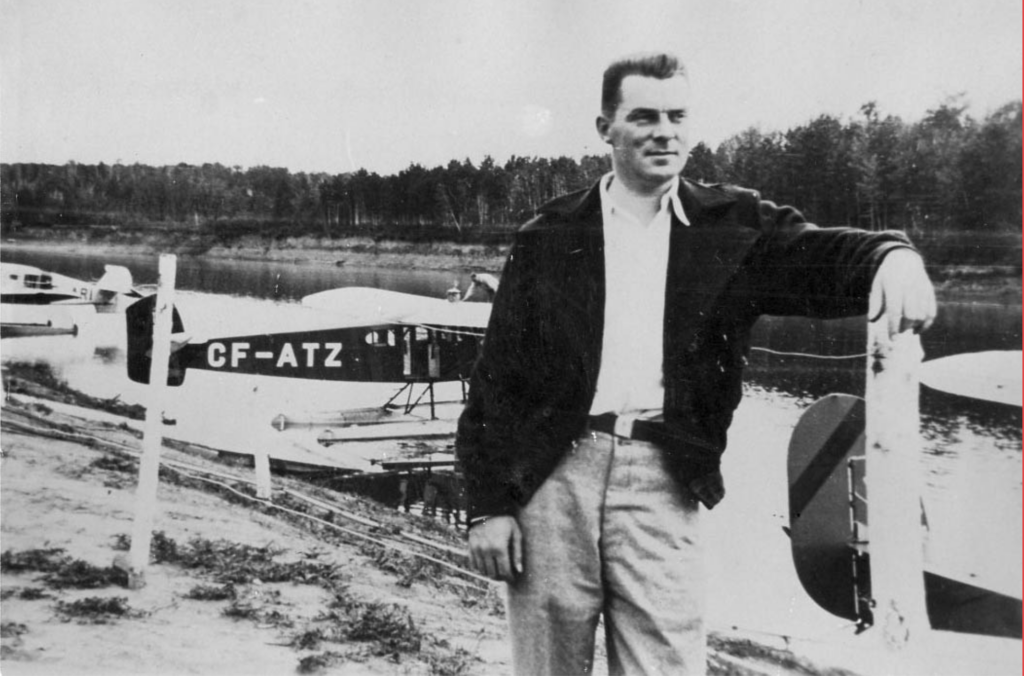
(Photo: Royal Aviation Museum of Western Canada)
4. The bush pilots asked de Havilland Canada for a compact-but-powerful plane that could take off and land where there were tiny runways – or even no runways whatsoever. They asked for the ability to carry bulky objects up to the size of an oil drum. DHC warned the pilots: “If we build something like this, it won’t have a good airspeed once airborne.” The pilots’ response was frank: “As long as it’s faster than a dog sled, we’re still winning.”
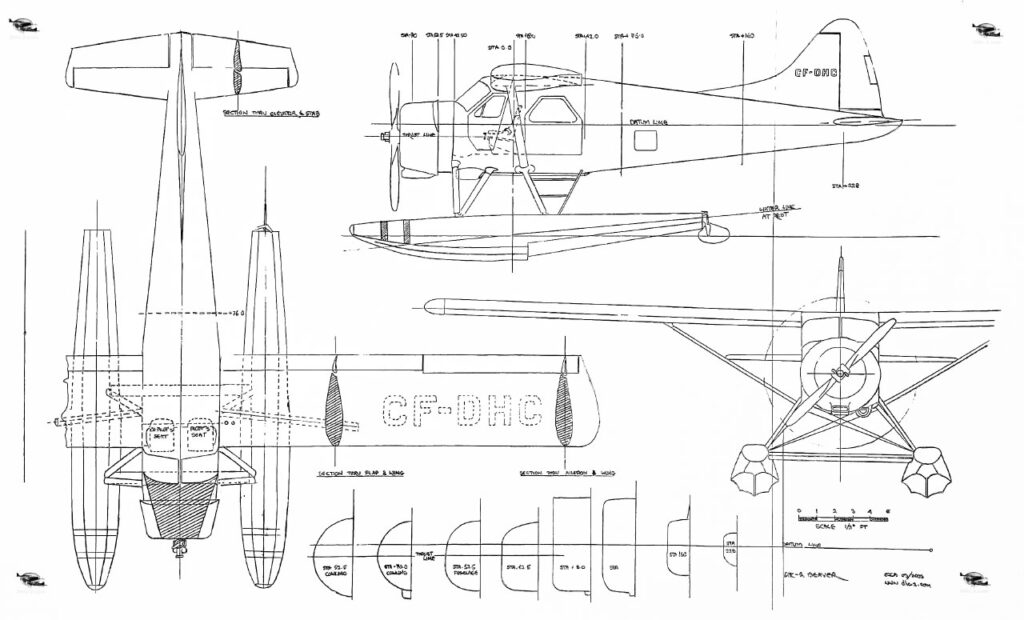
(Image: DHC Collection – Aird Archives)
5. The resulting aircraft was the DHC-2. A wingspan of nearly 15 metres gave it the ability to take off and land at very low speeds. Large side-doors maximised the payload that would fit into this small plane. And of course, with a choice of wheels, floats or even skis, this little plane was designed to go anywhere.
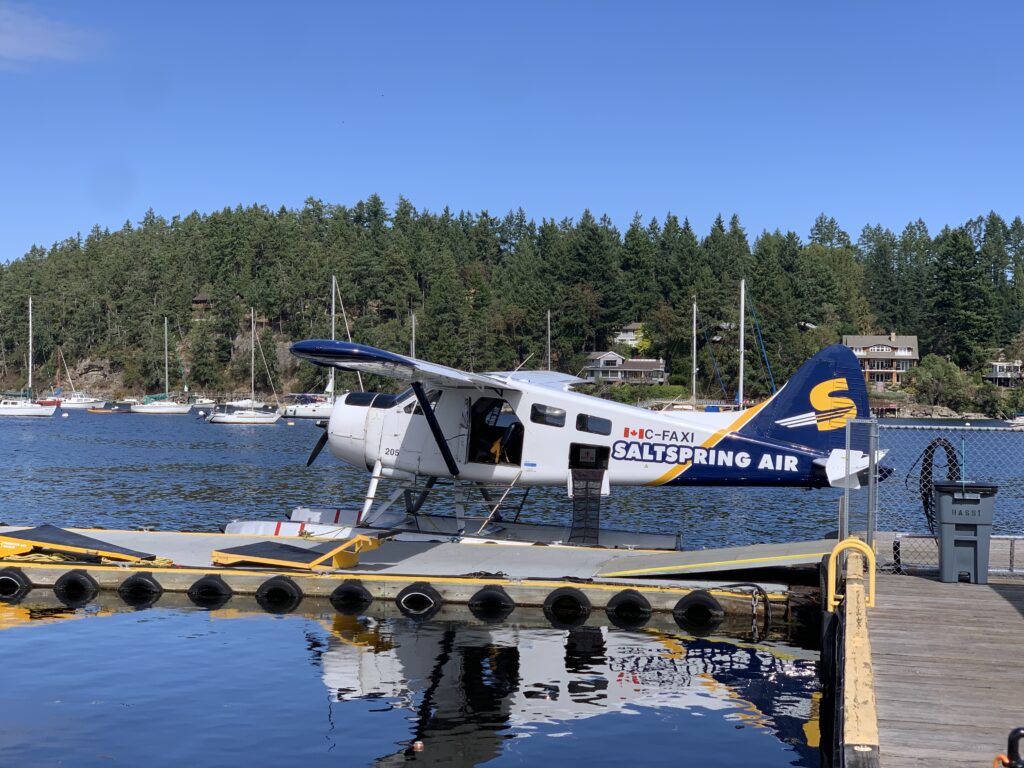
6. But the new aircraft needed a name. de Havilland Canada’s previous model was called the ‘Chipmunk’. What should this new Canadian plane be called, with its amphibious nature and its ingenuity? The DHC-2 became the Beaver.
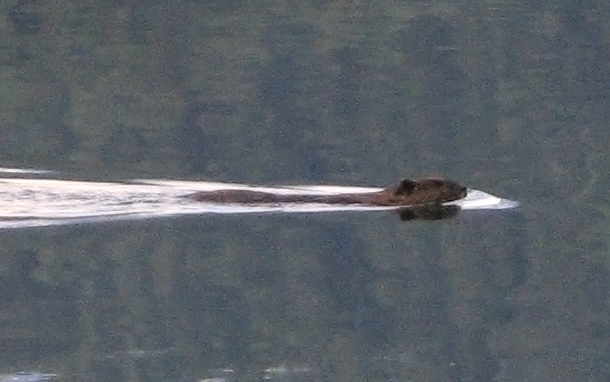
7. Between 1946 and 1967, around 1,600 Beavers were constructed. They quickly became established as the ideal plane for supporting remote settlements and industries – not just in North America, but on every continent.
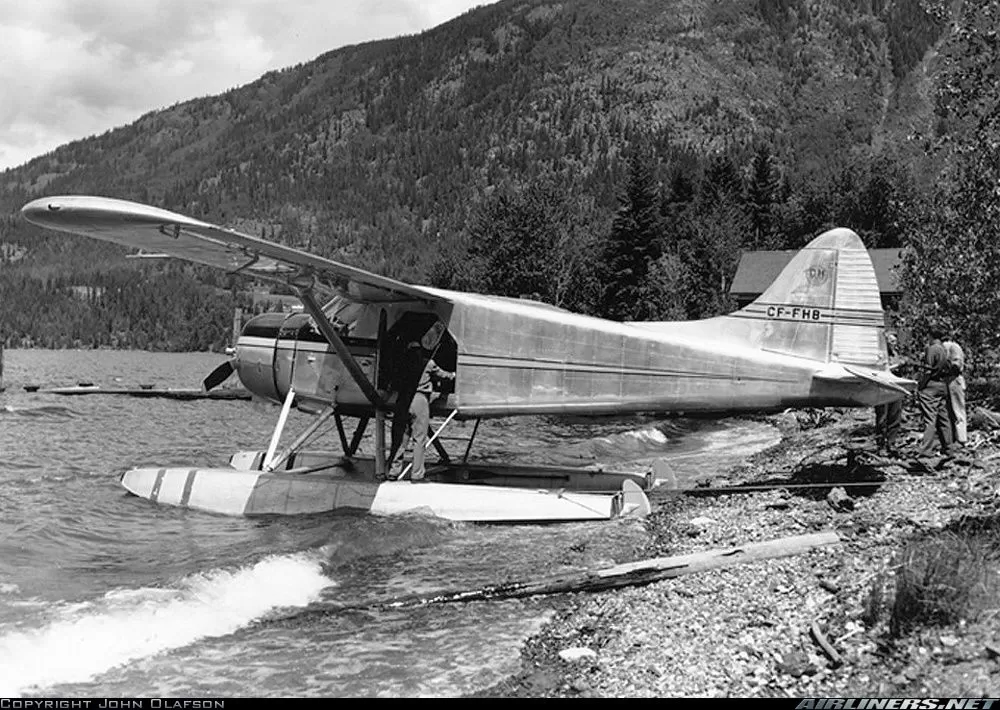
(Photo: John Olafson)
8. For many decades, Beavers were used by engineers, loggers, farmers and others – in this photo preparing to distribute seed or fertiliser.
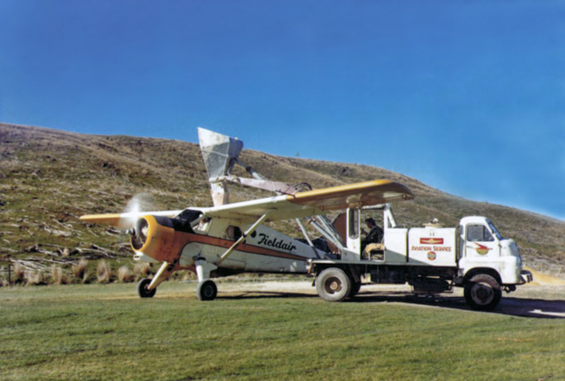
(Photo: K.Turner)
9. Ironically for an aircraft that was born out of the end of a war, the world’s militaries soon realised what an amazingly capable aircraft the Beaver was. In fact, over half the Beavers ever built were purchased by the US military. The one pictured here is part of the Royal New Zealand Air Force, supporting an Antarctic expedition – and equipped with skis.
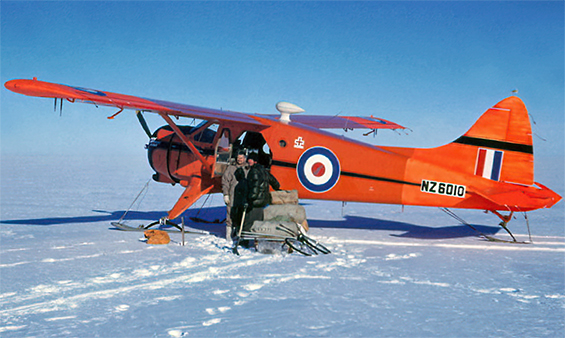
(Photo: Barry Smith)
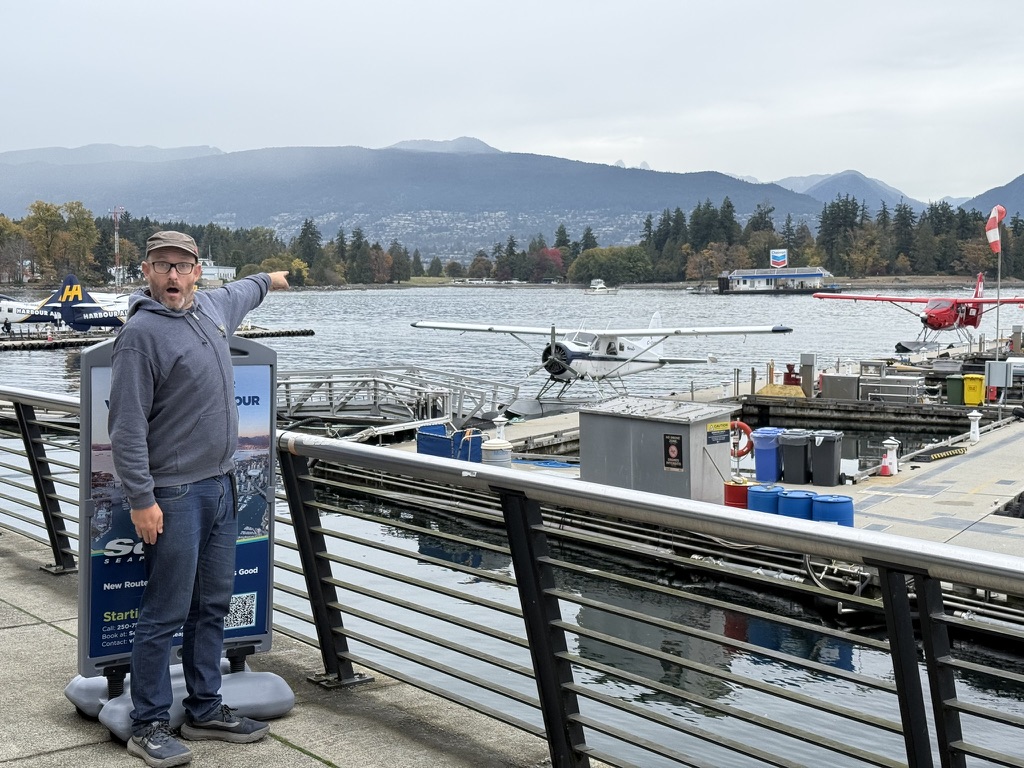
10. But what about today? Pictured here is the unceded territory of the Squamish, Musqueam and Tsleil-Waututh people – otherwise known as Vancouver – where there is a floating airport moored off the shore of the downtown area. Every few minutes, a Beaver (or its sibling the Otter) can be seen taking off or landing.
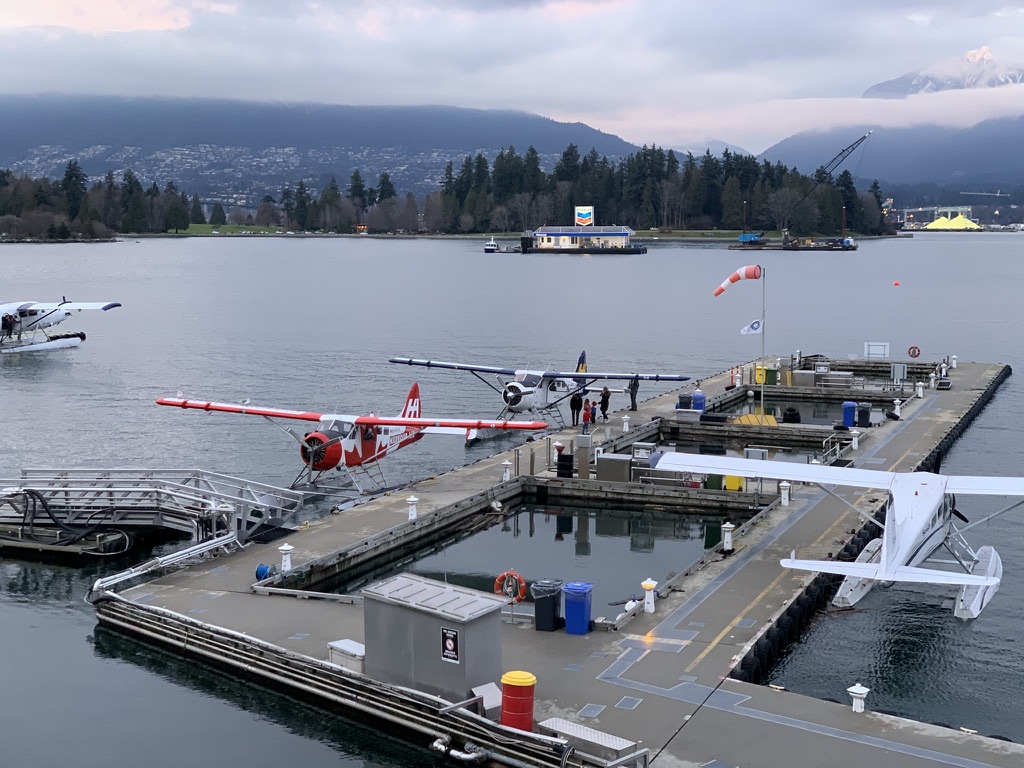
11. Let’s talk about the noise. At times in British Columbia you find yourself riding through a forest when you hear a deep roar – a sound that has been described as that of “someone starting a lawnmower in a cathedral”. You look up to spot the source of this huge noise – and all you see is the diminutive Beaver, floating through the sky.
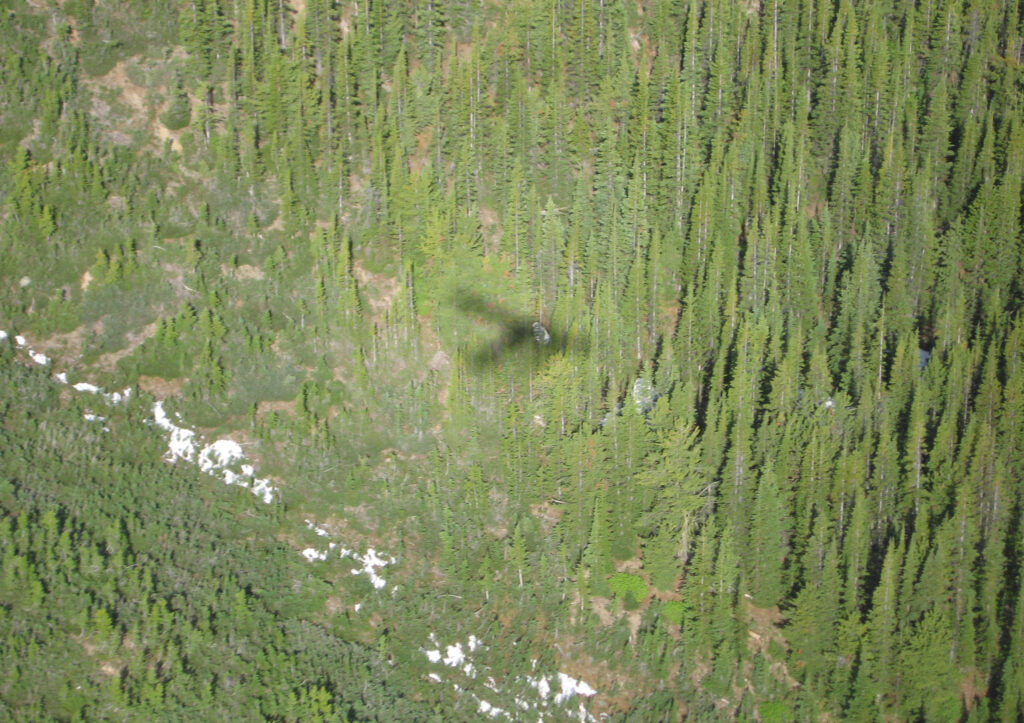
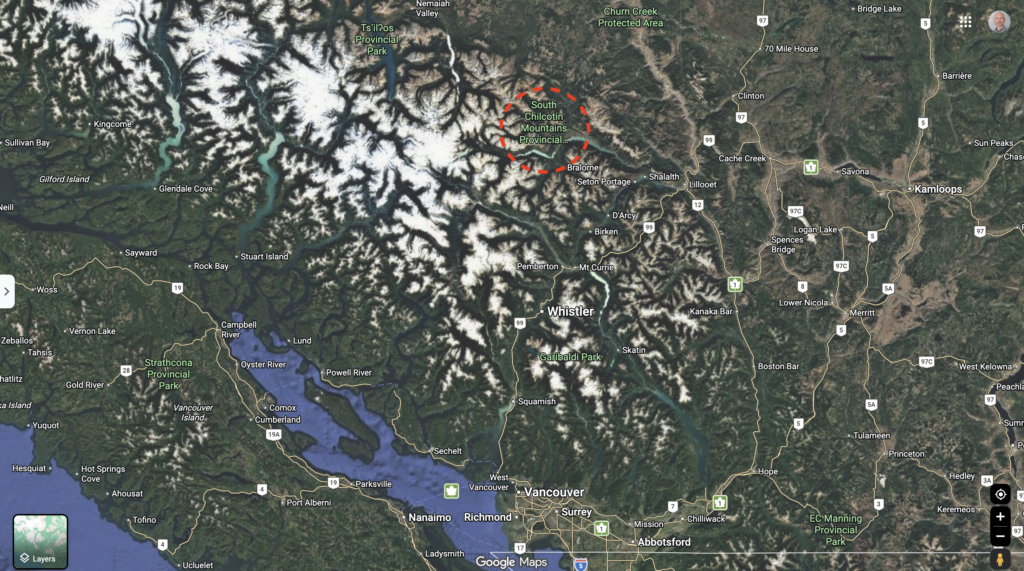
12. Imagine you have arrived in Vancouver and driven north for around five hours, to reach the Chilcotin territory, in British Columbia’s mountainous interior…
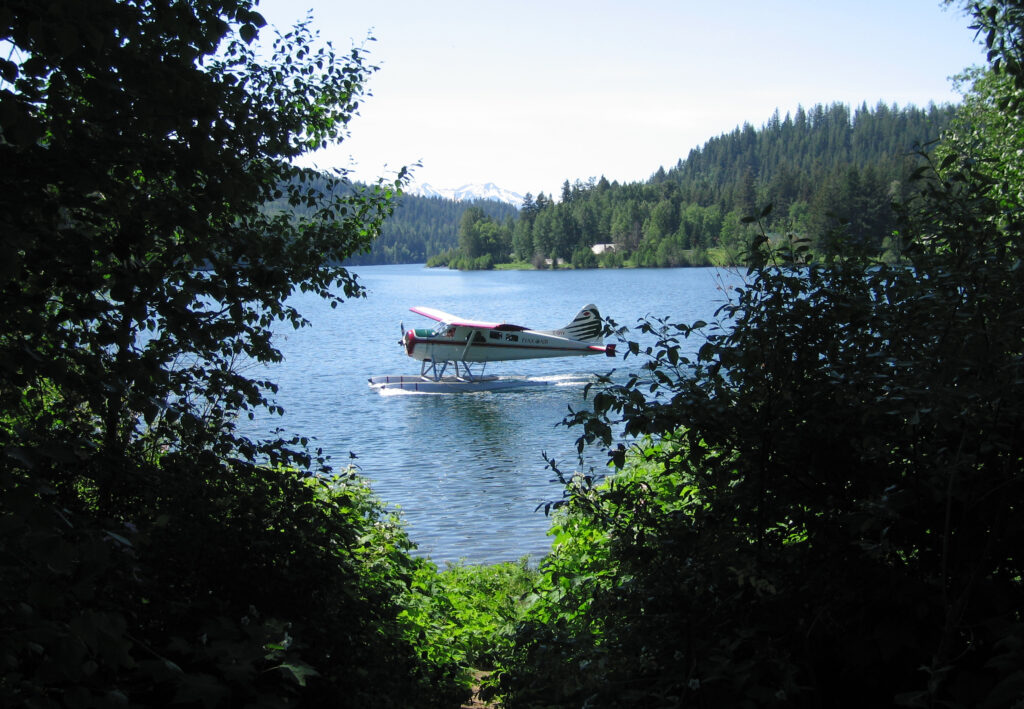
13. You camp beside a lake and wake to a deep throbbing sound – much slower than the noise of the flying Beaver you heard earlier. You look out from your tent to see a Beaver – not flying but floating – as it putt-putt-putts its way towards you across the lake.
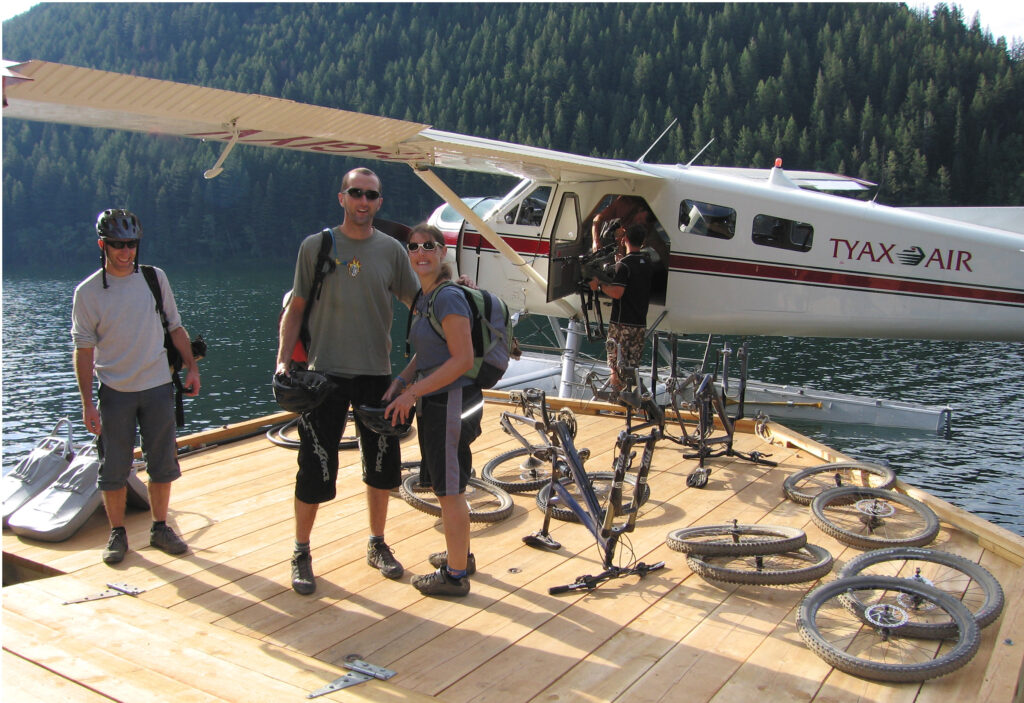
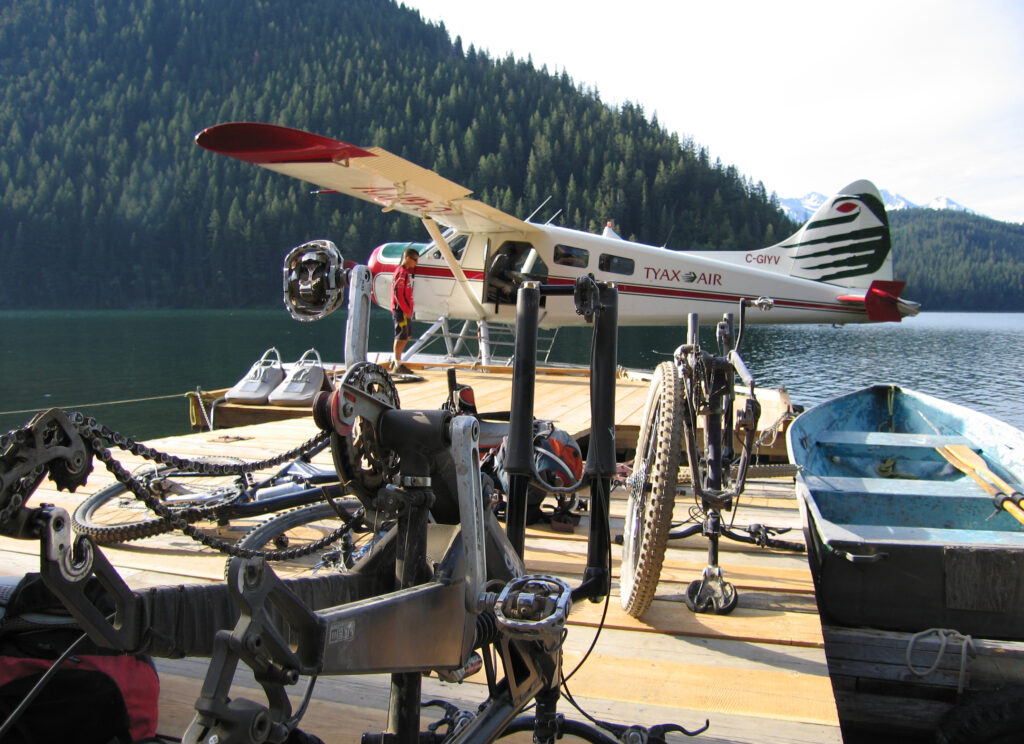
14. Remember those large side cargo doors we noticed earlier? The ones designed to accommodate an oil drum? There’s something else the size of an oil drum: a mountain bike with its wheels removed. There is great excitement as the pilot carefully loads the plane: four bikes, eight wheels, four riders.
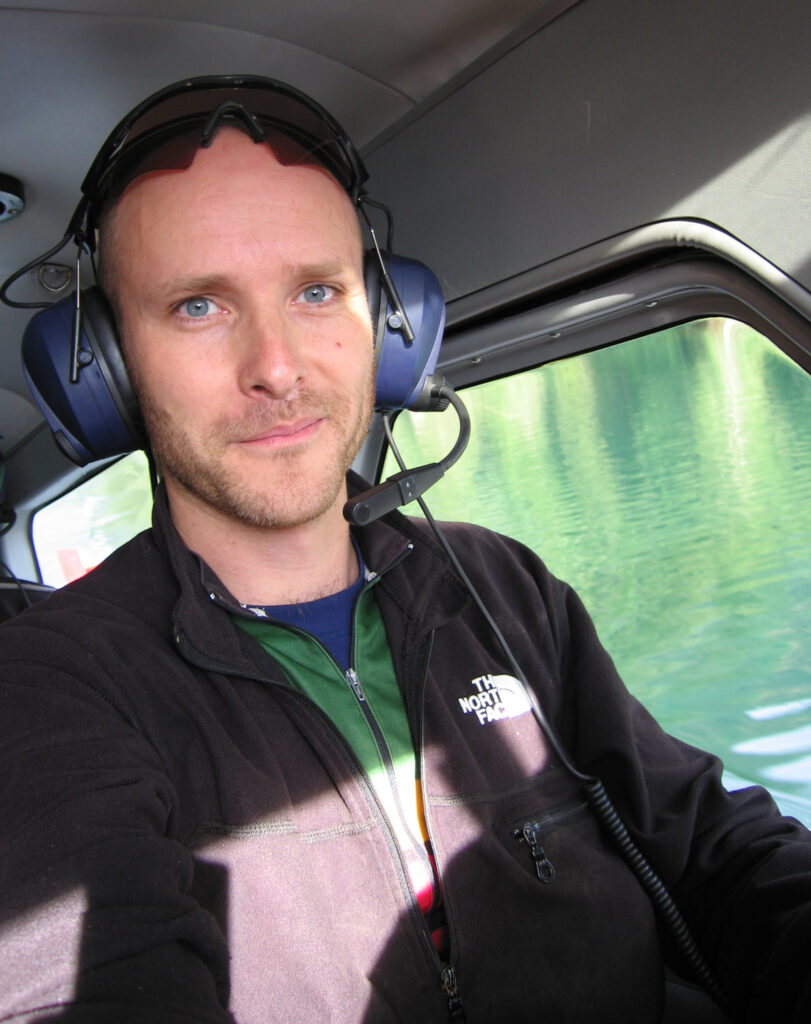
15. This is me. This is me feeling very excited indeed. This is me with the sound of Bob Marley’s Two Little Birds playing in my ears (the pilot’s choice, not mine). To this day, the sound of Two Little Birds always brings me back to this unique experience.
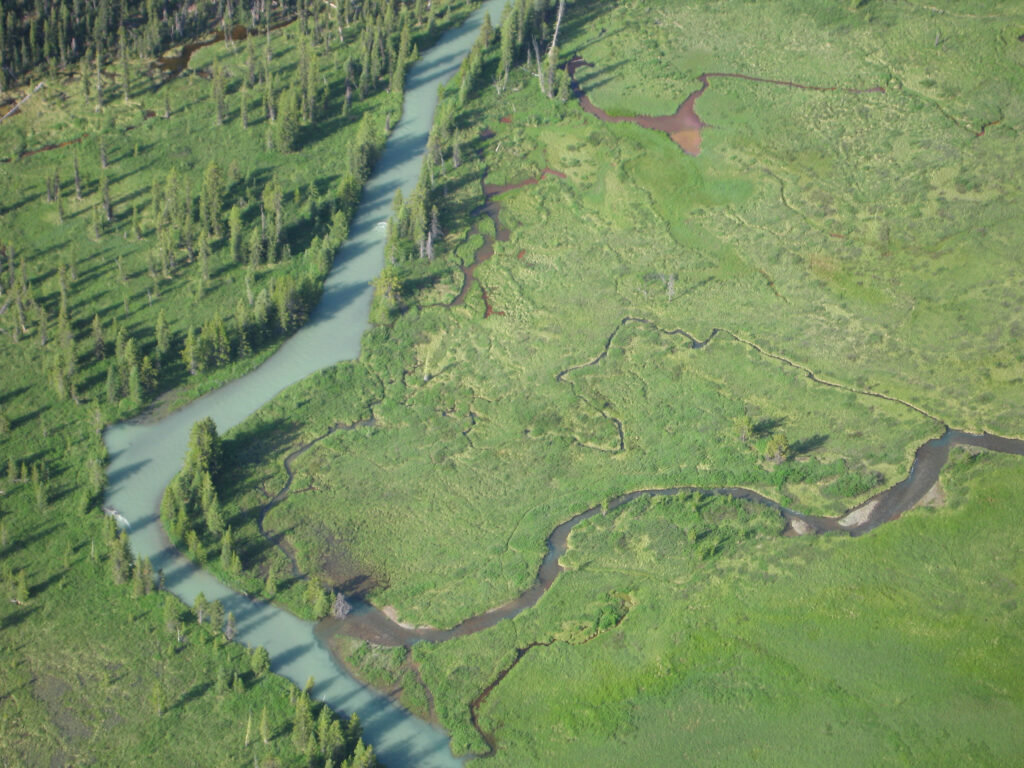
16. The Beaver speeds up across the surface of the water, and in no time we are airborne, looking down on the untouched terrain of the Chilcotins. This river flows milky-white, its water full of minerals from glacial melt.
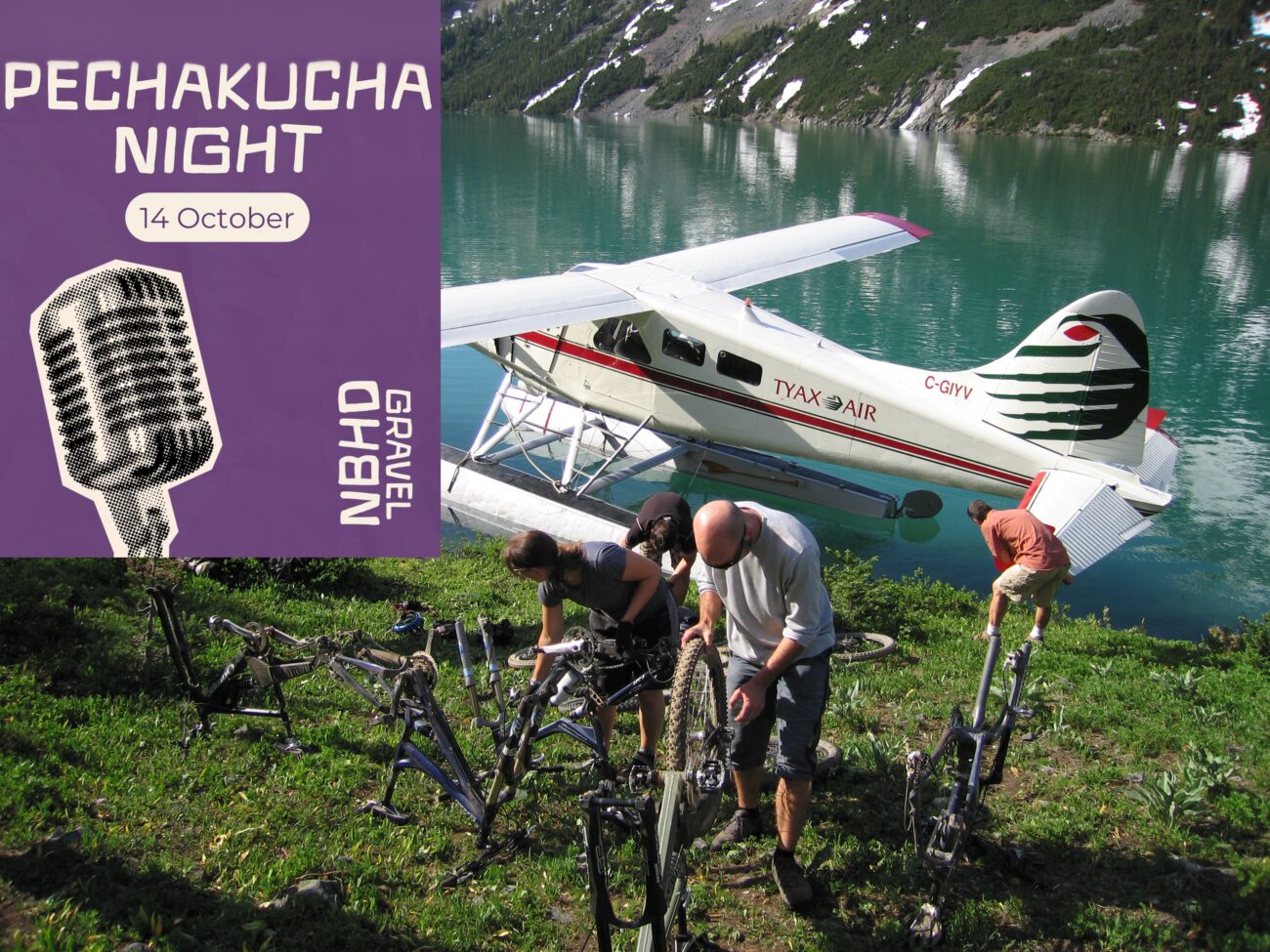
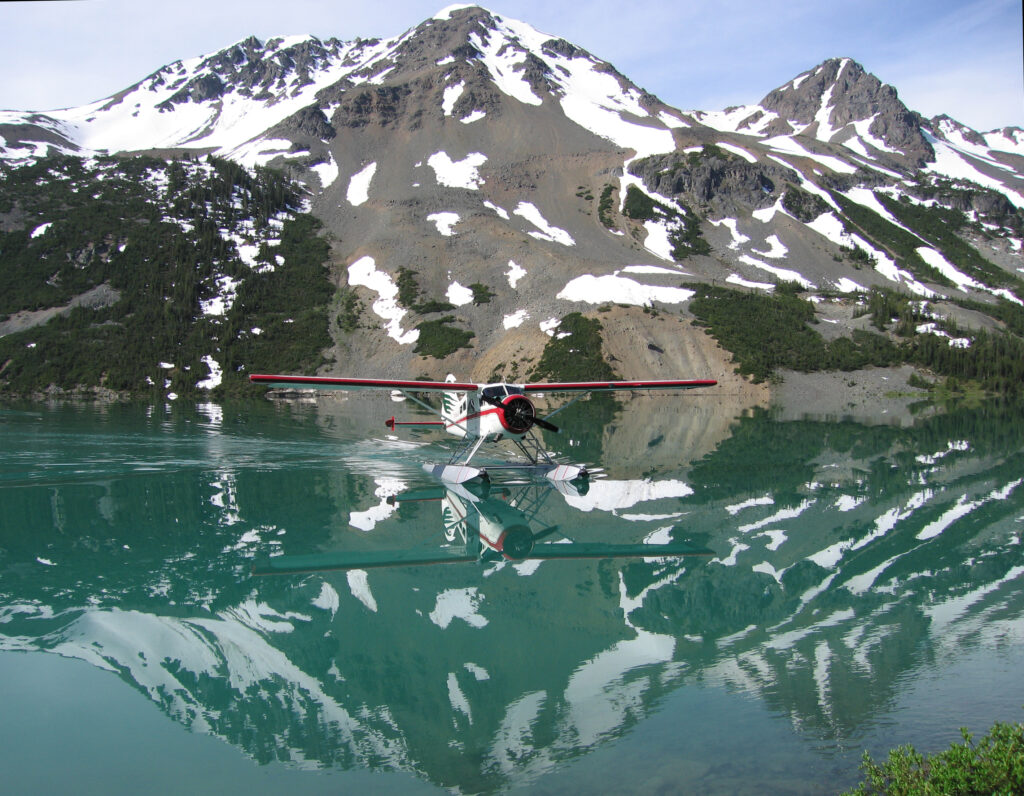
17. We climb through the mountains and land smoothly on Warner Lake – one of the most beautiful places I’ve ever seen. Our pilot steers the Beaver towards the shore.
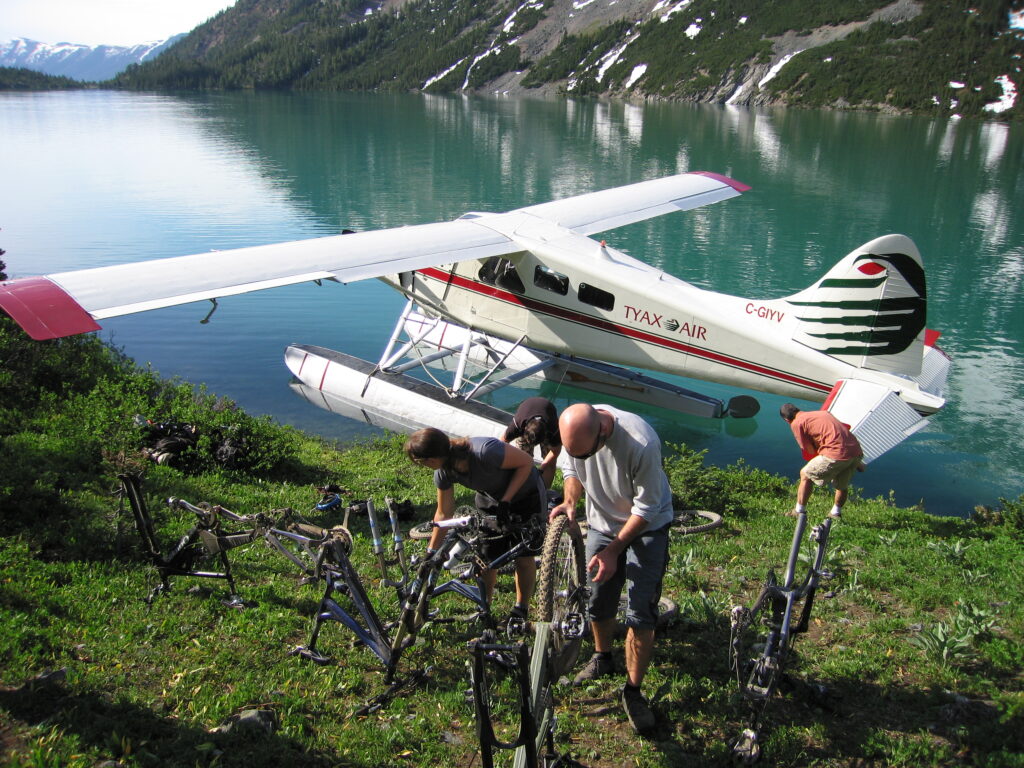
18. As we reassemble our bikes, the only distraction from the stunning landscape is the presence of enormous mosquitoes, pestering us constantly.
19. And then, the ride itself. The ride back down is everything you would hope for from a ride in British Columbia. Wonderful trails, gushing rivers, mountain peaks, and even a bear sighting or two.
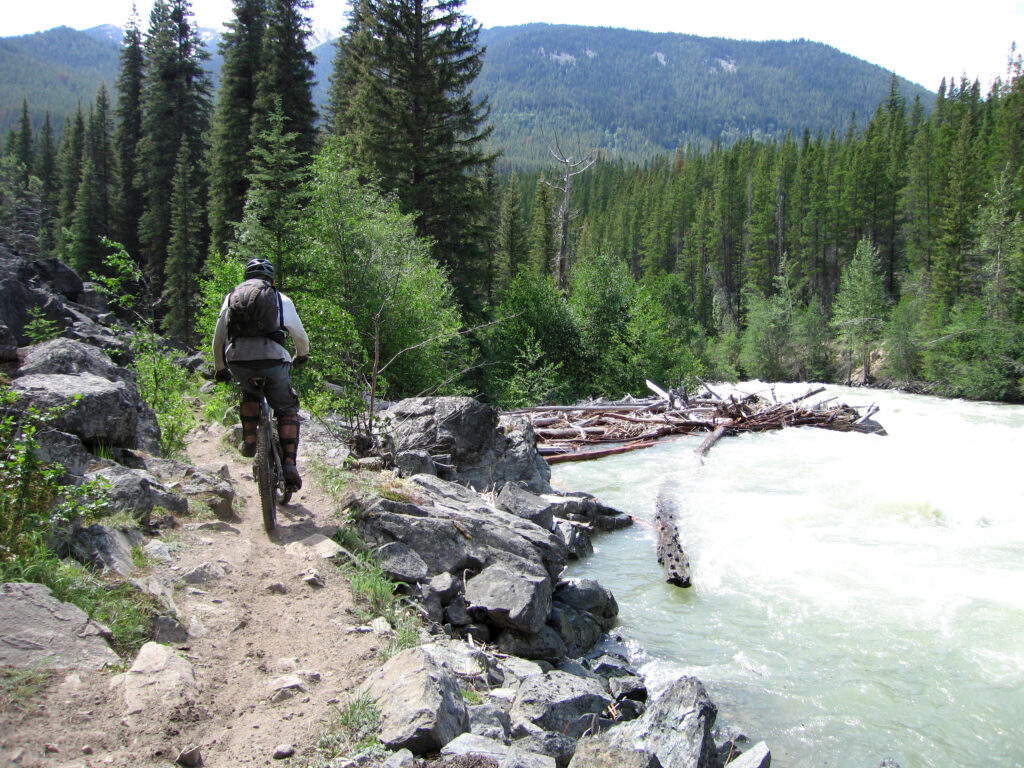
20. So remember: We live in difficult times, but war eventually gives way to peace. Peace creates cool little aircraft, and cool little aircraft enable fabulous bike rides.